
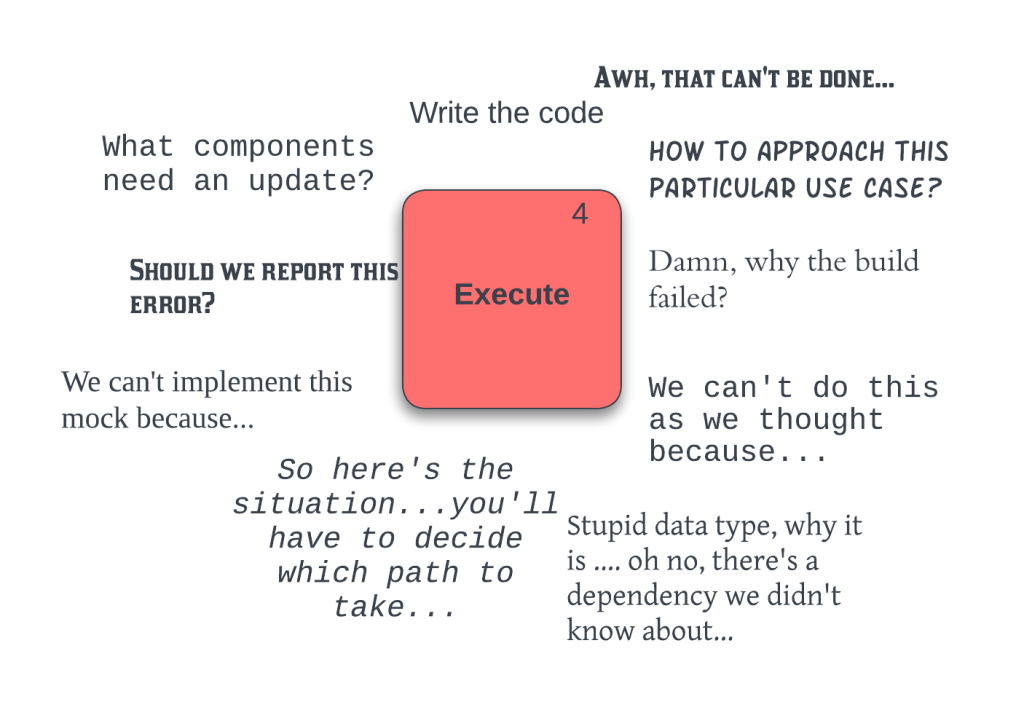
The execution phase is where work gets done, code is written, updated, committed, reviewed, merged. This is the stage where the project either succeeds or fails. From all the phases this is the one most prone to problems. Why? No easy answer but…
- Identify, Define and Plan failed to clarify what/why is to be solved; the message was not clear; common issue is to have too many details, thus becoming inflexible or too little, thus being too ambiguous;
- The team underestimated the work/time required; A rule of thumb is to always have a buffer, at least 10% of the time should be reserved for one; People get sick, there are PTOs, CI/CD issues, delayed code reviews, dependencies on other teams, bugs and all the things the team did not think or ask about; Not leaving a buffer would almost certainly guarantee failure
- Scopespill – too many PM/PO want to have “more”, to put needless functionality; too many engineers are eager to make things better right away; one should be very careful and think things through; small changes can lead to serious consequences and delays
- Bad leadership – will save a blogpost for this one
- Bad alignment – no matter how sure-sure people are about being on the same page, rest assured – they rarely are…
- The team – the team, the builders, the engineering team, they are the heart of the SDLC, will write about the team later but the team matters the most
Later on will go into the details but for now this should provide good enough overview. Stay tuned!